Buying Guides
Beginner's Guide to Choosing Safe Cookware: Coatings, Metals, and Care
Cookware is one of the few things you touch every day, often twice, and it quietly decides how food turns out. A thin pan with a tired coating will scorch pancakes no matter how carefully you watch the heat. Walk into a kitchen shop and the shelves push brand names and celebrity endorsements, but the material list on the box matters far more than the logo. What follows covers the coatings and metals you'll actually meet, what wears out and what lasts, and the checks worth doing before you hand over your money.
Nonstick Coatings: Convenient, Delicate, and Worth Understanding
Most nonstick pans use a fluoropolymer coating, usually PTFE. It is genuinely slick, and for eggs, fish, and anything starchy it saves both butter and frustration. The trade-off is fragility. The coating is soft enough that metal spatulas, stacking, and dishwashers shorten its life, and once it starts flaking the pan is done — there is no repair.
Heat is the other issue. PTFE is stable at normal cooking temperatures but breaks down well above them, and overheating a dry pan produces fumes that are harmful to pet birds in particular. Keep nonstick on medium heat, never preheat an empty pan on high, and open a window if you accidentally scorch one. If you'd rather avoid fluoropolymers entirely, that's a reasonable personal choice. Note that "PFOA-free" on a label refers to a processing aid most manufacturers stopped using years ago; it doesn't mean the pan has no coating.
Ceramic-coated pans are the usual alternative. They're free of PTFE, tolerate slightly higher heat, and are lovely for the first few months. Their weakness is durability: the sol-gel surface loses its slipperiness faster than PTFE, often within a year of steady use, even with gentle handling. Buy one expecting to replace it, and treat it as a tool for low-heat eggs rather than a daily searing pan.
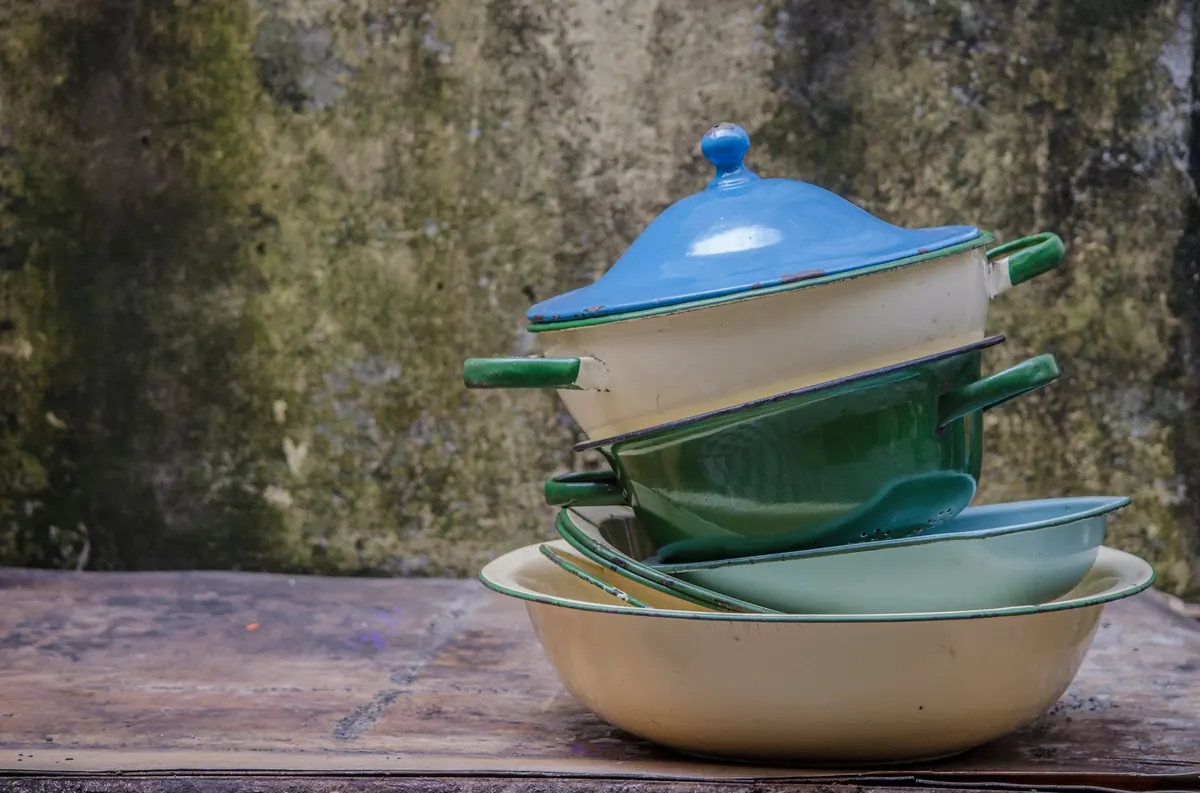
Enameled cast iron belongs in this family too. The glass coating is nonreactive, so it handles tomato sauce and wine reductions without picking up a metallic taste, and it looks good enough to bring to the table. It chips if you bang it against a sink or shock it with cold water while hot, so handle it like the ceramic it is.
Stainless Steel: The Pan You Can't Really Kill
Uncoated stainless steel has no surface to wear out. Scratch it, scour it, deglaze it with vinegar, put it in the oven — it comes back. The cost is technique. Food sticks to cold stainless, so preheat the pan properly, add fat, and let meat sit until it releases on its own.
What "clad" means on the label
Stainless is a poor heat conductor on its own, which is why good pans are clad: layers of stainless wrapped around an aluminum or copper core that spreads heat. A fully clad pan has those layers running up the sides; a disk-bottom pan only has them on the base, which is fine for flat work but less even on a gas flame. Check for an induction-compatible magnetic base if that's your stove, and look at how the handle is attached — rivets are sturdy and easy to tighten, welded handles have no crevices to trap food.
Cast Iron and Carbon Steel: Buy Once, Maintain Forever
Cast iron holds heat like nothing else and goes from stovetop to oven to campfire. It's heavy, slow to respond to temperature changes, and needs seasoning — a thin layer of polymerized oil that builds with use and provides the release. New pans come preseasoned; keep it going by cooking with fat, scrubbing with hot water and a stiff brush rather than soap, drying thoroughly on the stove, and wiping on a little oil while still warm. Long simmers of tomato or wine will strip a young seasoning, so save those for enamel or stainless.
Carbon steel is the restaurant workhorse: lighter than cast iron, quicker to heat, and it takes the same seasoning. If you want one pan to sear, roast, and stir-fry for the next decade, it's hard to beat.
Aluminum, Copper, and the Reactivity Question
Bare aluminum is light and conducts heat well, but it reacts with acidic and alkaline foods, which can leave a metallic taste and discolour the pan. Hard-anodized aluminum solves this by sealing the surface, and it's the base for many mid-range nonstick pans. Copper is the best conductor of the common metals, which is why serious saucepans use it — but it needs a lining, usually stainless steel, and unlined copper is best left for sugar work. Tin-lined copper is traditional and needs relining once the tin wears thin.
What to Check Before You Buy
The box tells you less than the pan in your hand. Run through this list in the shop:
- Weight and balance. Pick it up with a wrist-flick as if tossing vegetables. A pan that feels nose-heavy will tire you out, and a handle that's uncomfortably hot or thin will annoy you every single meal.
- Oven safety. Find the maximum oven temperature, and confirm whether the lid and handle share that rating. Many "oven-safe" pans have plastic handles rated far lower than the pan itself.
- Base flatness. Spin it on a flat surface. A wobble means poor contact and uneven cooking, especially on electric and induction hobs.
- Induction compatibility. Bring a magnet if you're unsure — if it sticks firmly to the base, the pan will work.
- Coating honesty. Ask how thick the coating is and whether the maker sells the pan as dishwasher-safe. If it doesn't, believe it.
- Size reality. A 28 cm frying pan sounds generous but can crowd a small hob and make a two-egg breakfast feel lonely. Measure your largest burner before buying.
- Warranty terms. Read what's excluded. Coating wear is almost always excluded; handle and body defects usually aren't.
Care Habits That Outlast Any Brand
Most pans die from thermal shock rather than cooking. Never run a hot pan under cold water; let it cool on the hob or a trivet first. Use wood, silicone, or plastic utensils on coated surfaces, and stack pans with a cloth or felt protector between them. Wash by hand when you can, dry immediately, and store lids separately so they don't scratch anything.
For stainless, a paste of bicarbonate of soda lifts scorch marks without scratching. For cast iron, the drying step matters more than anything else — moisture left in a skillet is what causes rust, not the cooking itself.
A Small Starter Set That Covers Most Cooking
You don't need fifteen pans. A 26–28 cm stainless frying pan, a 24 cm nonstick pan kept for eggs and fish, a 3–4 litre stainless saucepan with a lid, and one cast iron or carbon steel skillet will handle the overwhelming majority of home cooking. Add a small nonstick or ceramic pan later if you cook eggs daily, and replace coated pans the moment the surface flakes rather than waiting for them to fail completely.
Buy the metal for the job, read the care instructions once, and follow them. That's most of what separates a pan that lasts five years from one that lasts twenty. If you have specific health concerns about cookware materials — particularly with older, damaged, or unlabelled pans — it's worth raising them with a qualified professional rather than relying on forum threads.
Photo: Claudia Solari / Pexels
Related Articles