Buying Guides
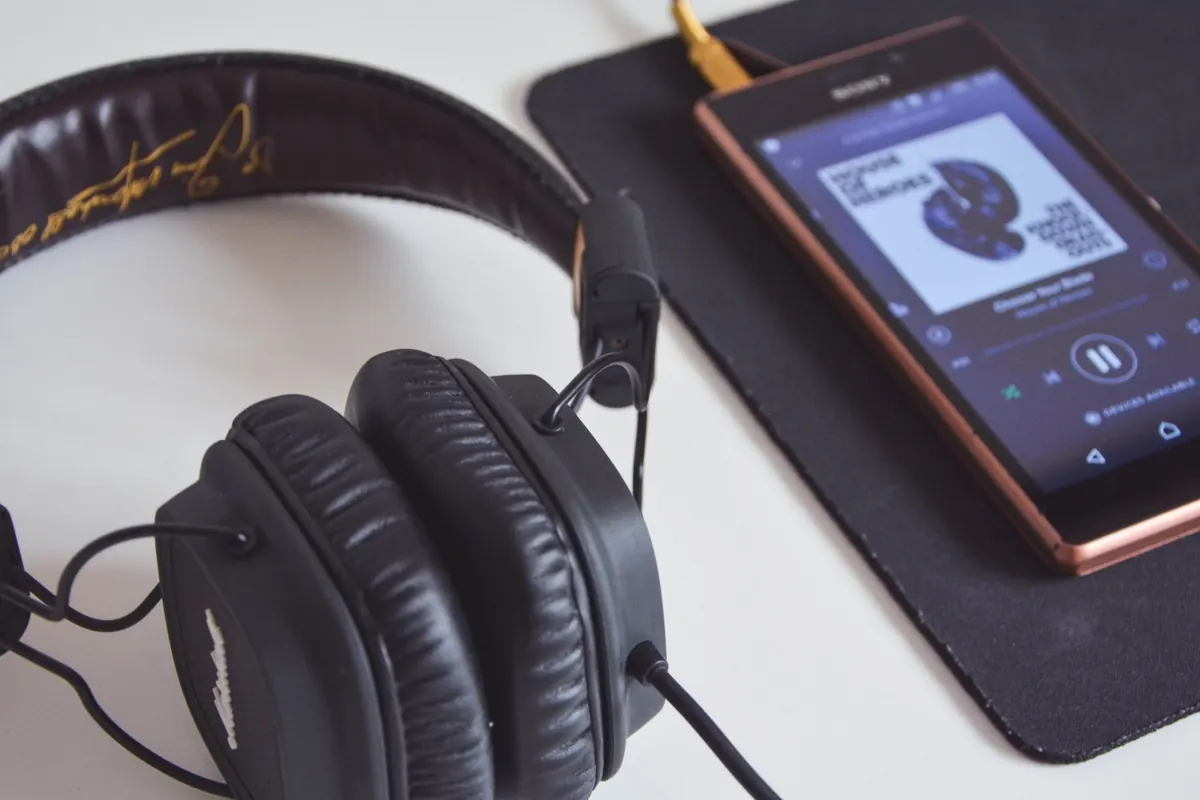
Noise-Canceling Headphones Explained: ANC, Passive Isolation, and What Specs Mean
Two people can buy headphones with the same "30 dB noise reduction" figure and have completely different experiences on the same flight. One arrives rested; the other spends six hours turning the volume up to drown out the cabin. The difference is rarely the marketing. It's understanding what the number measures, what it ignores, and how the two very different systems inside a pair of headphones — active cancellation and passive isolation — actually divide the work.
Here's the useful version, without the spec-sheet theatre.
What headphones can and can't block
Sound reaches your ear by two routes: through the air around the earcup, and through the materials of the cup itself. Everything a headphone does about noise attacks one of those routes. Nothing makes noise disappear entirely.
It also helps to know which noises matter. Steady, low-frequency sound — engine drone, air-conditioning hum, the rumble of a train, a fridge compressor — is predictable and repetitive, and predictable sound is easy to cancel electronically. Human speech, cutlery, a dog barking, a baby crying: these are broadband, sudden and unpredictable, and they are the hardest thing to remove. If your main problem is an open-plan office full of conversation, no headphone will produce silence. It will produce quiet, which is a different product.
Active noise cancellation, in plain English
ANC works on a simple principle. Tiny microphones on or inside the earcups listen to the noise arriving, a processor analyses it in real time, and the driver plays a matching sound wave inverted — like a photographic negative of the noise. Where the two meet, they largely cancel. The result is that the low rumble is removed before it reaches your ear, and you can hear the music at a lower volume.
Two details are worth knowing:
- It's best at low frequencies. Physics and processing speed limit how fast a system can react. Slow, repetitive bass-heavy noise gets cancelled well; a sharp clatter mostly doesn't.
- There are different architectures. Microphones outside the cup (feedforward) catch noise early; microphones inside (feedback) hear what you actually hear. Most good headphones use both, which is why they can adapt as the seal changes when you move your head.
Adaptive ANC and transparency mode
"Adaptive" usually means the headphones measure surrounding noise and adjust the strength of cancellation automatically. It's genuinely useful on a commute that shifts from a quiet platform to a noisy carriage, but it can also produce audible shifts — a slight waver or pressure change as the system recalibrates. Some models let you fix the level manually. If you're sensitive to that sensation, look for one that does.
Transparency (or ambient) mode is the same hardware in reverse: the microphones pick up outside sound and pipe it in, so you can order a coffee without removing the headphones. It's become the feature people use most and mention least.
Passive isolation: the part you can't switch off
Passive isolation is everything the physical object does to block sound: the seal around your ears, the density of the cup, the padding, the clamp. It costs no battery, never glitches, and works on every kind of noise — including the high-frequency sounds ANC struggles with.
This is why fit matters more than any figure on the box. A pair of over-ears with a broken seal — glasses arms pushing through the cushion, thick hair, a hat, a jaw that moves when you talk — loses isolation and gives ANC a harder job. In-ear models live or die by tip fit; a foam tip that expands into the ear canal often isolates better than an expensive active system with a loose silicone tip.
If a headphone feels loose or presses unevenly, treat the noise-reduction claims as an upper limit you probably won't reach.
Where passive beats active
On a plane, the two work together: passive cups handle the mid and high frequencies and give ANC a quieter starting point. In a library or a quiet café, passive isolation alone is often enough — and it doesn't introduce the faint hiss or slight pressure feeling some people notice when ANC is engaged. If you're prone to that sensation, try before you buy, or buy from somewhere with a returns window.
Reading the spec sheet without being fooled
Noise reduction is quoted in decibels, and a bigger number is not automatically better. A few reasons:
- The figure is usually a best case at particular frequencies. "Up to 30 dB" might describe performance at 100 Hz and nowhere else. Ask for a range, not a peak.
- Measurement methods vary between brands. There's no single consumer standard everyone uses, so comparing one manufacturer's number with another's is approximate at best.
- Decibels are logarithmic. A 10 dB reduction is roughly a halving of perceived loudness; 20 dB is a further large step. The gap between 25 and 30 dB is not trivial, but it's not the chasm the marketing implies.
- The ear is the final judge. Fit, ear shape and the type of noise around you affect the result more than a two-digit figure.
Other specs deserve a quick translation. Frequency response tells you the range the headphones can reproduce, not how good they sound — a wide number is easy to print and says little about tuning. Impedance and sensitivity matter mainly for wired use with weak sources. Bluetooth version and codec support tell you about connection stability and efficiency; support for higher-quality codecs helps only if your phone supports them too.
What battery claims leave out
A headline like "40 hours" almost always comes with conditions buried in a footnote. Before you compare two pairs, check whether the figure assumes ANC on or off — the difference is often substantial, since the microphones and processor draw power continuously.
Then ask what else was switched off. The common variables:
- Volume level (tests usually use a moderate setting)
- ANC versus transparency versus both off
- Spatial audio, head tracking or always-on voice assistants
- Codec choice — some high-quality codecs are less power-efficient
- Multipoint connections, which keep two devices active at once
A realistic habit: take the quoted figure, subtract a fifth for ANC, and assume your own loud listening will shave off a bit more. Also check the charging situation. A five-minute quick charge for several hours of playback is more useful day to day than a slightly larger full-charge number. And if the battery is not user-replaceable, the headphones' working life is effectively the life of the cell.
Things the specs can't tell you
Two headphones with near-identical numbers can feel entirely different. Comfort over a two-hour session, the weight on top of your head, how warm your ears get, whether the cups creak when you turn, how well the microphones handle a windy street during a call, whether the buttons are findable without looking — none of this appears on a spec sheet, and all of it decides whether you actually use the thing.
One more: ear pads wear out. Flattened, cracked pads leak sound and wreck both isolation and ANC performance. Replacing them every couple of years is often cheaper than a new pair of headphones and restores most of what you liked in the first place.
A practical way to choose
Start with the noise, not the number. If your problem is engine drone and air-conditioning, ANC plus a decent seal is worth paying for. If it's conversation and clatter, prioritise passive isolation and a good fit, and accept that voices will still get through. Read the battery figure twice — once for ANC on, once for ANC off — and check the return policy before you commit.
Then, if you can, listen for ten minutes in the kind of place you'll actually use them. Your ears run a better test than any spec sheet, and they're the only reviewer that matters.
Photo: Mihis Alex / Pexels
Related Articles